
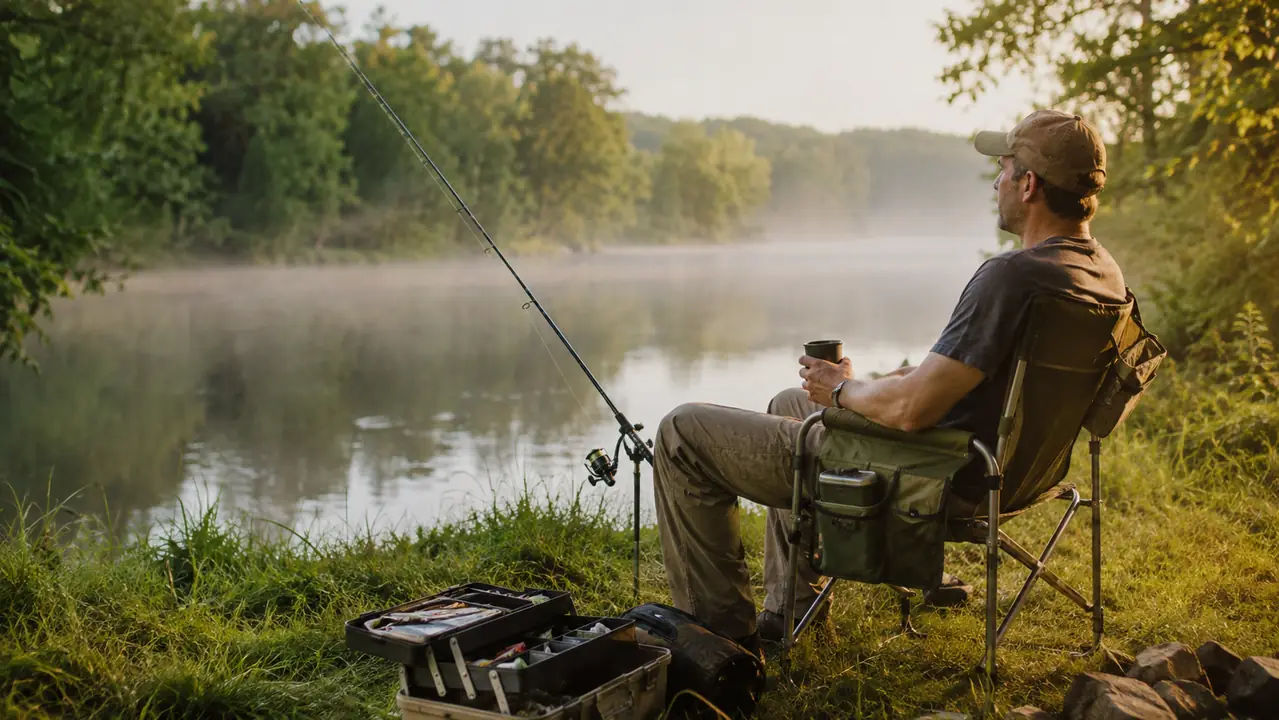
The hardest part of a fishing trip is not the fishing. It's the twenty minutes after you park the truck, when you are holding a rod in one hand and a tackle bag in the other and trying to figure out where your backside is going to live for the next six hours. I fished the first half of my life out of an upside-down five-gallon bucket on a gravel bar, and my lower back still sends me the bill for it. Some trips the bucket was fine. Most trips it meant I was standing more than fishing, and standing was never the point of going.
Here is the version of the trip I run now. I tow my boat out most weekends, and most of those weekends I set up a day camp on the bank before the first cast. It is not one chair and a cooler. It is a system, and the whole thing goes together in under ten minutes when you pack it in the right order. The anchor of the whole setup is the Coleman camping chair with the cooler built into the arm, because it does three jobs at once: it sits level on uneven bank, it keeps four drinks cold, and it keeps your rod in view without you holding it.
Ten Minutes From Truck to First Cast
The bank is comfortable before the bait is wet. The Coleman camping chair with the 4-can cooler arm sets up in seconds, and everything you actually need sits within arm's reach instead of in the truck.
Amazon Check Today's Price on Amazon →Step 1: Pick the Bend, Not the Pool
Before the chair comes out of the truck, decide where the camp is going. I look for the inside of a bend, or a point that pushes current past a deeper channel. Moving water holds the fish; a wide pool that is easy to launch from looks nicer and catches less. You came for the fish, so camp where the cast counts. I have burned whole mornings on a pretty pool that produced nothing while ten yards around the bend the fish were lined up waiting.
Then check the ground. Level is worth more than scenic. A chair on a slope tilts you forward and you spend the whole day correcting it. The Coleman has four wide feet and it settles into grass or gravel fine, but it cannot fix a cross-slope by itself. Kick a flat spot smooth before you do anything else, or lay a square of plywood from under the truck seat on the soft ground. On sand the same trick keeps the chair from sinking as the day goes on.
Last, look at the wind and the sun before you commit. Put the bank at your back in the morning so the sun is over your shoulder, not in your eyes when you are watching a bobber. Have the wind come across the bank, not into your face, so your casts land straight and your line drifts with the current instead of into the brush on the far side. Thirty seconds of looking costs you nothing and changes every cast after it.
Step 2: Put the Chair Down First
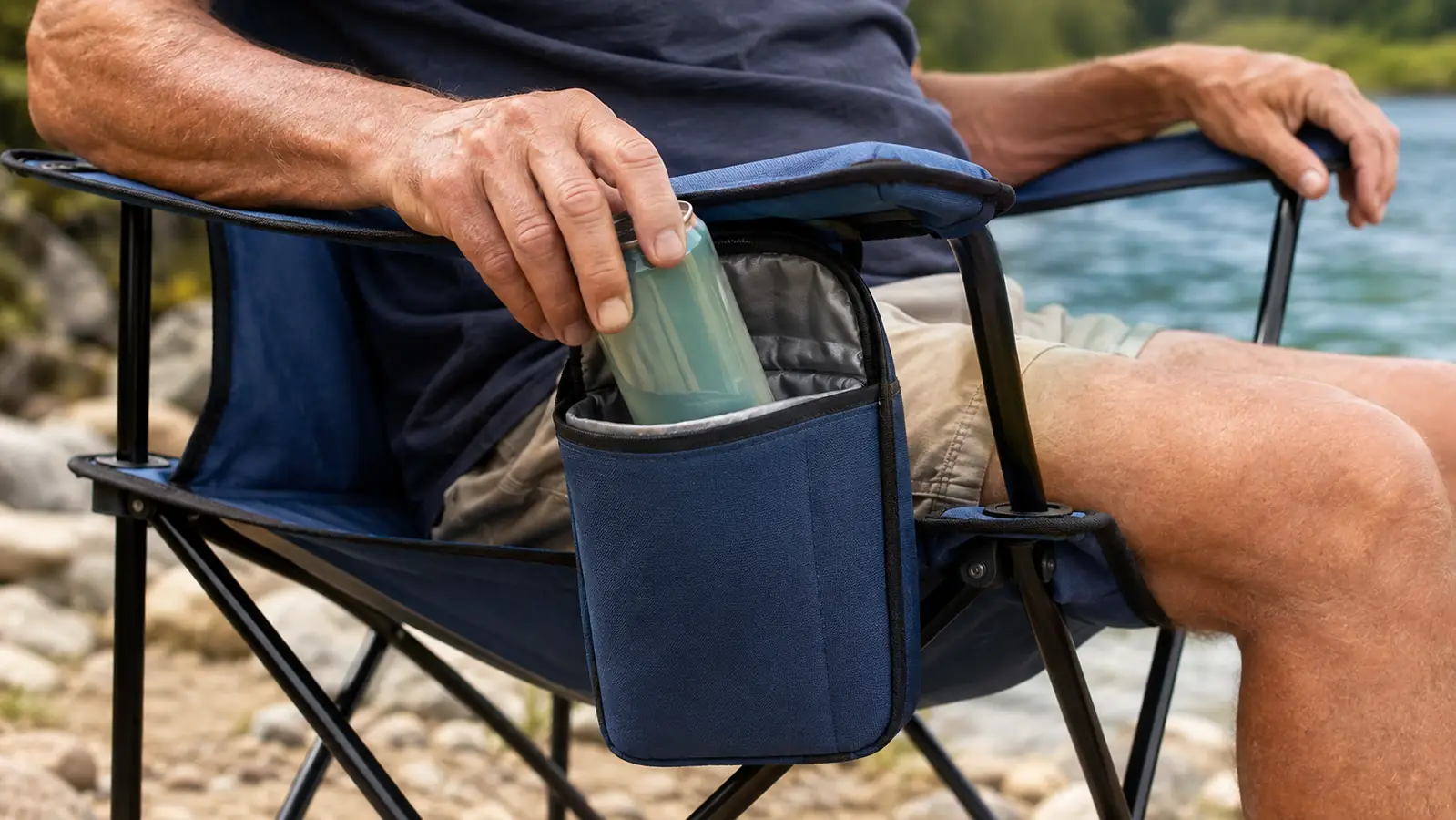
The chair is the center of the camp, so it goes down before anything else. Face it so you can watch the tips of two rods at once without getting up. I sit slightly upstream of my rod holders, which puts the cooler arm of the chair on my casting side, where the pliers, the line cutter, and the day's drinks all end up living. The angle is the difference between fishing and guarding gear.
The Coleman's side pockets get loaded before I sit down: shears and a hook file on one side, sunscreen and a tube of bobber stops on the other, cup in the cup holder. That sounds like fussing, but it is exactly what keeps me in the chair instead of walking back to the truck for the third time. Every item that has a home in the chair is an item that does not get lost in the grass. I keep the carry bag bunched under the seat, which keeps it dry and stops the wind from sailing it into the water.
Test the seat once, front to back and side to side. Four feet on the ground on the first try is the whole game. If the chair rocks, fix the ground now, because everything after this step gets balanced on the same spot: the table beside it, the tackle box on the table, the rods in the holders, and your patience. One thing I do every trip is set the chair with its back to the prevailing wind when I can, so the chair takes the gusts instead of my neck. When the afternoon breeze picks up, sitting in the lee of the chair back is worth more than any windbreak you would have packed.
Step 3: Build the Tackle Station on Your Casting Side
On the casting side of the chair I set a small folding table, and on that table the tackle box rides open for the whole day. The day's rigs go on the top tray: the three or four lures that match the morning, the packet of hooks, the weights. Everything else stays in the box, closed, and out of the wind. A table saves your knees and your tackle in one move, and it gives the wind nothing to flip through on the way past.
The table also gives the day a place for the small stuff that would otherwise live in your lap: the phone, the keys, the stringer, the snacks you did not want sitting in the sun. Keep the stringer in the shade under the table, and the top surface is only ever tackle. A bait keeper on the table leg or in the shade keeps minnows and worms out of the heat until you need them, so you are not re-rigging dead bait at ten in the morning.
Keep the table within arm's reach of the chair, not a step away. The difference matters because you can retie without taking your eyes off the water. When the bobber dips a foot past your line, you want your hand in the tackle box, not your feet in the gravel. That reach is the difference between a quick re-rig and a missed take. The rod that is not in a holder leans against the table, butt on the ground, reel facing up, and every rod gets that same home the second it comes out of the truck.
Step 4: Seat the Rods Before You Rig
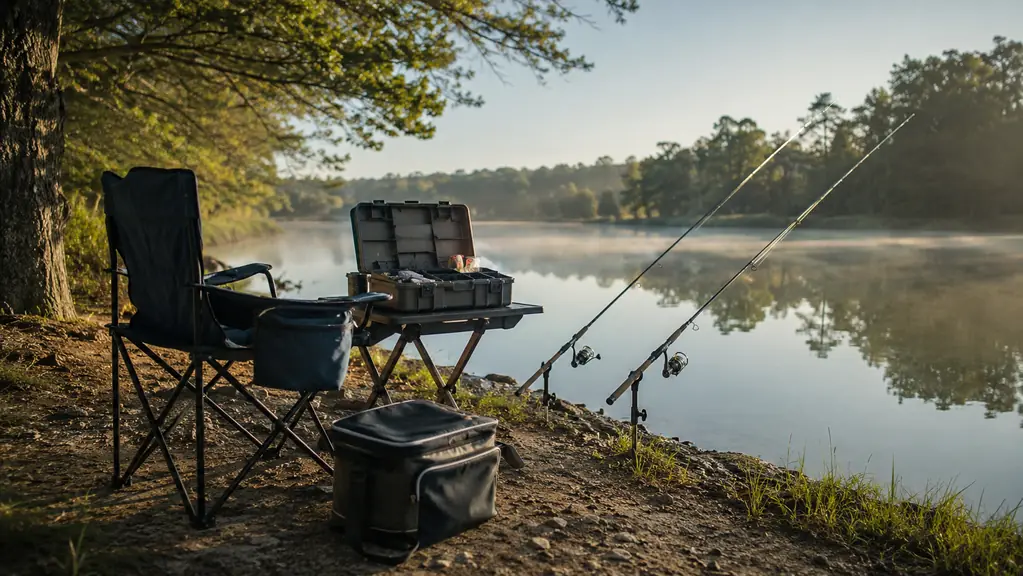
I keep two bank spikes in the truck, and they go into the ground before any rod gets baited. The rods sit in the holders while I thread line and tie knots, which means a rod is never balanced against a cooler or laid flat in the grass where the reel picks up sand. Sand in a reel is a slow death, and it is a death you can avoid for the cost of a bank spike. If you fish from the boat more than the bank, the same rule applies with the rod holders on the gunwale.
Thirty degrees off vertical, tips high, spaced so the lines cannot cross when the wind swings them. I point the tips toward the water at an angle too, so a hard strike drives the rod deeper into the holder instead of popping it out of the spike. One rod works the bottom, one rod floats a bait, and the chair sits between them with the cooler arm open. That is the whole camp, and it is the reason the coffee survives to the second cup. Nothing needs doing for long stretches, and that is the entire point.
It is worth saying what the 4-can cooler on the arm actually is, because it is the feature everyone asks about first. It holds four standard cans tight against the side of the chair, and it keeps them cool for a couple of hours on a warm morning. It is not a real cooler. By early afternoon those drinks are close to air temperature, so pack the lunch in a proper cooler in the shade and use the arm pocket for the first round. Used that way, the arm pocket is the most used piece of gear in the whole camp.
Step 5: Pack the Truck in Unloading Order
The ten-minute version depends entirely on how the truck is packed. Mine goes together fast because it comes apart in the right order: chair on the tailgate, table under it, tackle box beside it, and the rod tubes on top so they come out first and get set against the gunwale while the camp goes down. Pack for the order of the setup, not for how the bed looks full. The cooler with the lunch and a jug of water goes in last and comes off first, because the chair needs a minute to settle anyway.
When I get it right, the sequence takes under ten minutes: bank spikes in, chair down and loaded, table and tackle box, rods seated, then the coffee and the first cast. When I get it wrong, the chair is under the cooler, the tackle box is in the cab, and the whole morning has a second trip to the truck in the middle of it. The system is the shortcut. Once the order is in your hands, it stops being a checklist and just becomes how you come off the ramp.
I timed the whole thing last weekend on the James, because it finally felt worth counting. Nine minutes and change from tailgate to a baited hook, and then I sat in the chair with a coffee and watched nothing happen for twenty minutes before the first fish showed up. That quiet stretch at the start is the whole reason for the camp.
What Else Helps
A few small things pull the rest of the weight. A cheap folding table with a carry bag gives the tackle a flat home that stays out of the grass. A reel cover on the spare rod stops grit when it bounces around the bed on the drive in. A headlamp in the chair's side pocket means the camp stays exactly where it was when the evening bite runs late, instead of you packing up in the dark. And a cloth to wipe the dew off the seat in the morning costs nothing and saves a wet start to the day.
The limits are worth naming so nobody is surprised. This Coleman chair is bulkier than a backpack chair, and while the carry bag is included, it does not shrink much for the trip. It is a truck chair, not a hike-to-the-alpine-lake chair. For what it does, a day camp ten yards from the truck with the boat tied to the bank, I would not trade it. I covered the frame, the seams, and the honest wear in my full-season review, and I compared it head to head against the GCI rocker for anyone weighing the upgrade.
Ten minutes to set up means ten minutes to break down, and I keep it that way on purpose. The chair folds with the pockets still loaded, the table folds flat, and the whole camp rides back up the bank in two trips. Leave the bank the way you found it, and the spot will still be there next weekend. Run this system once on a real trip and you will not need the timer again. The bank works the way the boat deck does, and that is the best description of a good day camp I have.
Nine minutes and change from tailgate to a baited hook, and then I sat in the chair and watched nothing happen for twenty minutes before the first fish showed up.
Set the Bank Up Before You Rig
The day camp is ten minutes of upfront work that buys you a full day of not standing around. The Coleman camping chair with the 4-can cooler arm is the anchor of the whole setup, and everything else is a bonus on top of it.
Amazon Check Today's Price on Amazon →