
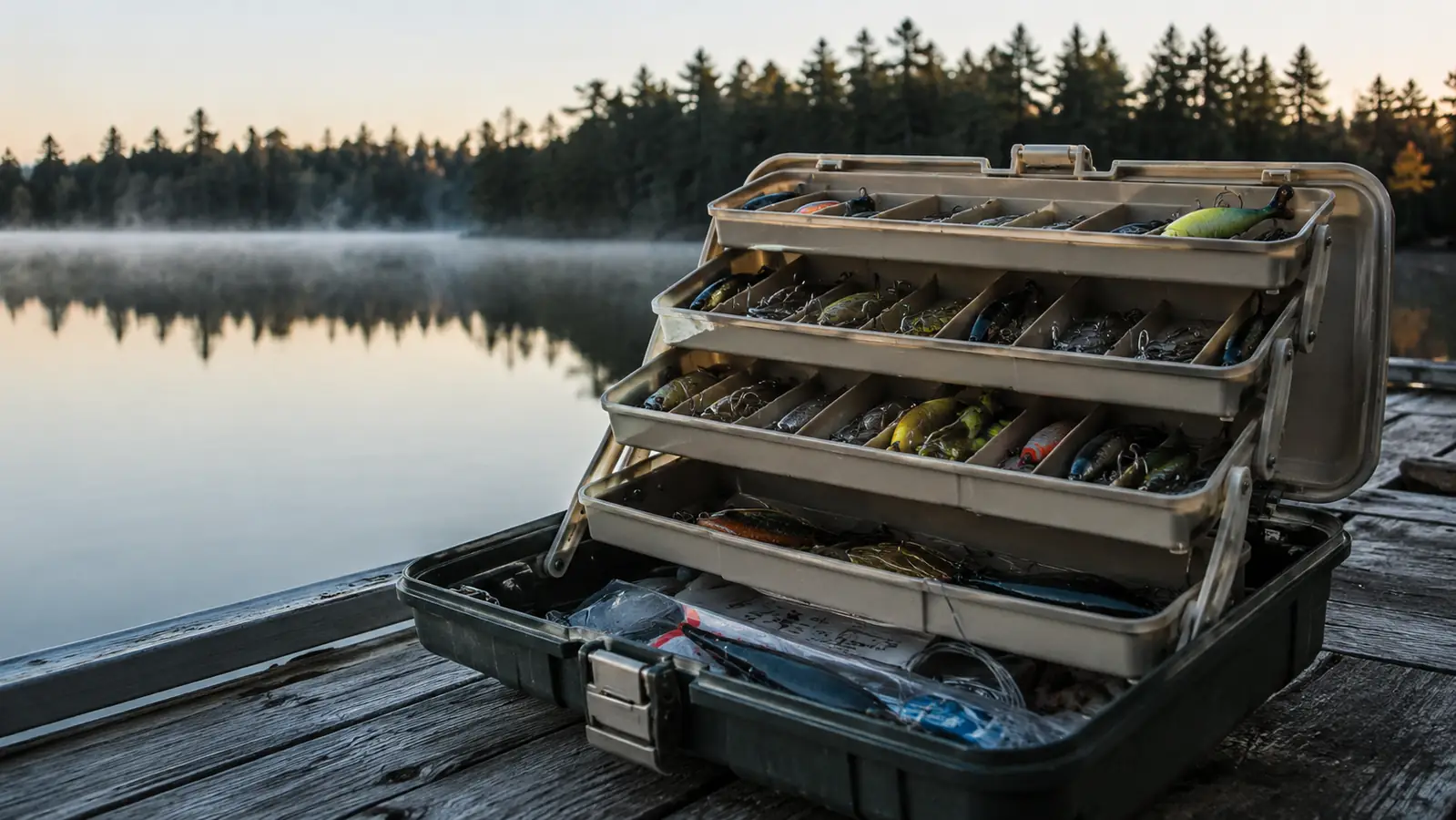
This is the version of me I do not bring up at the boat ramp. The fish are rising thirty feet off the bank, the light is going, and I am wrist deep in a tackle box that looks like a bait shop tipped over in a wind. Under a tangle of braid and a spilled packet of split shot is the one spinnerbait that has produced all week. I have dug for it three times and come out twice with a jig and once with a treble hook buried in my thumb.
I blamed the box for years. I traded up to hard cases with more trays, and the chaos just found new compartments to happen in, because the box was never the problem. The lack of a system was the problem. Give every tray one job and a tackle box stops being a gamble. Stuff everything in together and the most expensive case in the catalog still eats your lures.
The PLUSINNO all-in-one tackle box I have carried every trip this season costs a fraction of what I used to spend on a single hard case, and it shipped loaded with a full lure kit. It stays organized because I finally gave it a system. Here is that method, all five steps, tested on my own boat and bank, and it is the reason the box is now the fastest thing I open on a trip.
Skip the Twenty Minute Dig at Dusk
The PLUSINNO box comes loaded with a full lure kit in stacked trays, so the whole system costs about one quiet evening and very little money. Set it up the night before a trip and the only thing you will open on the water is a single tray.
Amazon Check Today's Price on Amazon →The Five Step Organization Method
Step 1: Empty the Box and See the Whole Mess
The first step is the one everyone skips, and it is most of the job. Pull every tray out of the PLUSINNO box and lay everything out on the picnic table, the boat deck, or the tailgate. Do not sort yet. Just empty it. You cannot organize a box you cannot see into, and I would bet half of what is in yours right now is not tackle.
When I did this last spring, I found three packs of the same size hooks, a pair of pliers I had replaced in June and never removed, and a tube of bait I could not have named if you paid me. That pile was history, not tackle. The first full sort took me the better part of an evening. The routine after that is about five minutes a trip, and it gets faster the more trips you do it.
As you empty it, keep a separate pile for the lures you actually reached for in the last month, the ones you can picture catching fish. Everything else gets a decision instead of a drawer: it either earns a tray in this box, or it goes to the garage box with the rest of the someday gear. That garage box has never once complained about the company, and the boat crew has never once asked where the good spinnerbait went.
One more reason to do this where there is a flat surface and good light: you are making every storage decision for the season in a single evening, and the table gives you the truth about how much stuff you actually own. A dark boat deck is how lures end up in the wrong box for three months.
Step 2: Give Every Tray One Job and Defend It
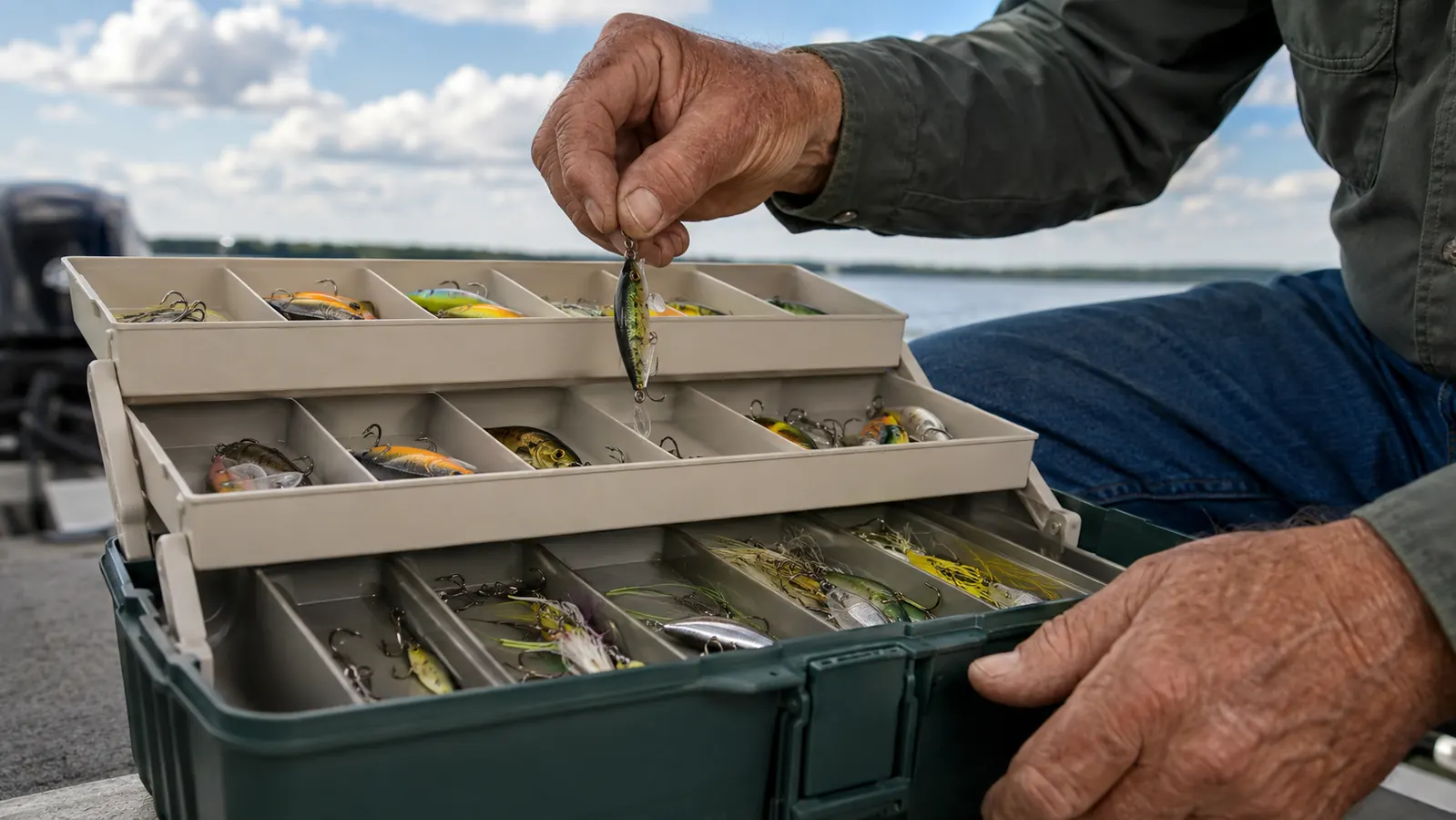
A tray without a job becomes a junk drawer, and a junk drawer is where lures go to get lost. The PLUSINNO box stacks several trays over a deeper bottom well, and each level needs a single purpose: a hard bait tray for crankbaits and spinnerbaits, a soft bait tray for the kit plastics, a tray for hooks and terminal tackle, and the deep well for weights, swivels and tools.
Write the job where you can see it. A strip of masking tape on the lid edge with the tray number and its job sounds like busywork until the third trip, when you open the correct tray on the first try without holding the box up to the sky. That is the whole point of a system: it makes the right answer the easy answer.
The rule I defend hardest is that nothing changes jobs. A spare pack of hooks does not ride with the crankbaits just because there is room. Empty room is how a sorted box goes back to chaos, one innocent little move at a time. The person who puts one hook pack in the wrong tray tonight is the person digging for it in the dark next Saturday.
Step 3: Sort Hooks by Size Before They Sort You
Hooks are the thing that turns a tackle box into a hazard. The PLUSINNO kit ships with a range of hooks and pre-rigged soft baits, and the trebles work, with one caveat we will come back to. Your own hooks need a real home, and they need it point first and separated from anything soft.
Loose hooks in a shared tray wrap themselves into everything in reach, and they find soft plastics first every time. A single loose treble will festoon itself with three different colors of worm before you launch the boat. I sort mine by size into the terminal tray, points down in a keeper, and I never let a bare hook rattle loose in a tray that holds anything soft.
The honest caveat on the kit hooks: a handful of the softest trebles will not hold an edge for long, and you will know exactly which ones they are the first time you set the hook and the point rolls over. That is normal for a box sold at this price. Keep a few spare hooks from your own supply in the terminal tray and swap out the soft ones as you find them. The box itself is the deal, the included lures are a bonus, and the hooks are the part you will replace.
The move that saves the most minutes is pre-rigging. I keep four or five hooks threaded onto snap swivels at the front of the terminal tray, ready to clip. A change of lure stops being a search and becomes one clip, which matters most at the exact hour the fish decide to feed.
Step 4: Keep Soft Plastics on Their Cards
Soft plastics commit most of the crimes against tackle box order. One loose worm escapes its pack, works its way out, and threads itself through every tray in the box, and a disciplined box becomes one interlocking knot wearing a dozen colors.
Leave them in the packs they came in. The PLUSINNO kit packs its soft baits on cards, and I stack those cards flat in the soft bait tray, with anything loose in a small zip bag rather than loose in the well. This was the single easiest change in the whole method, and it cut between-fish fiddling more than everything else combined.
When a card gets down to two worms and keeps coming open, retire the card. Fold it shut with a binder clip or hand the stragglers to a kid on the bank. A half-open pack rattling around a tray is how the whole box starts reading as a disaster, even when every other tray is perfect.
Step 5: Run a Today Tray on Top
Now the part that actually changed my trips. The top tray of the PLUSINNO box is not storage, it is the today tray. The night before a trip, or that morning over coffee, I put the rigs I will actually fish into the top tray and close the rest of the box.
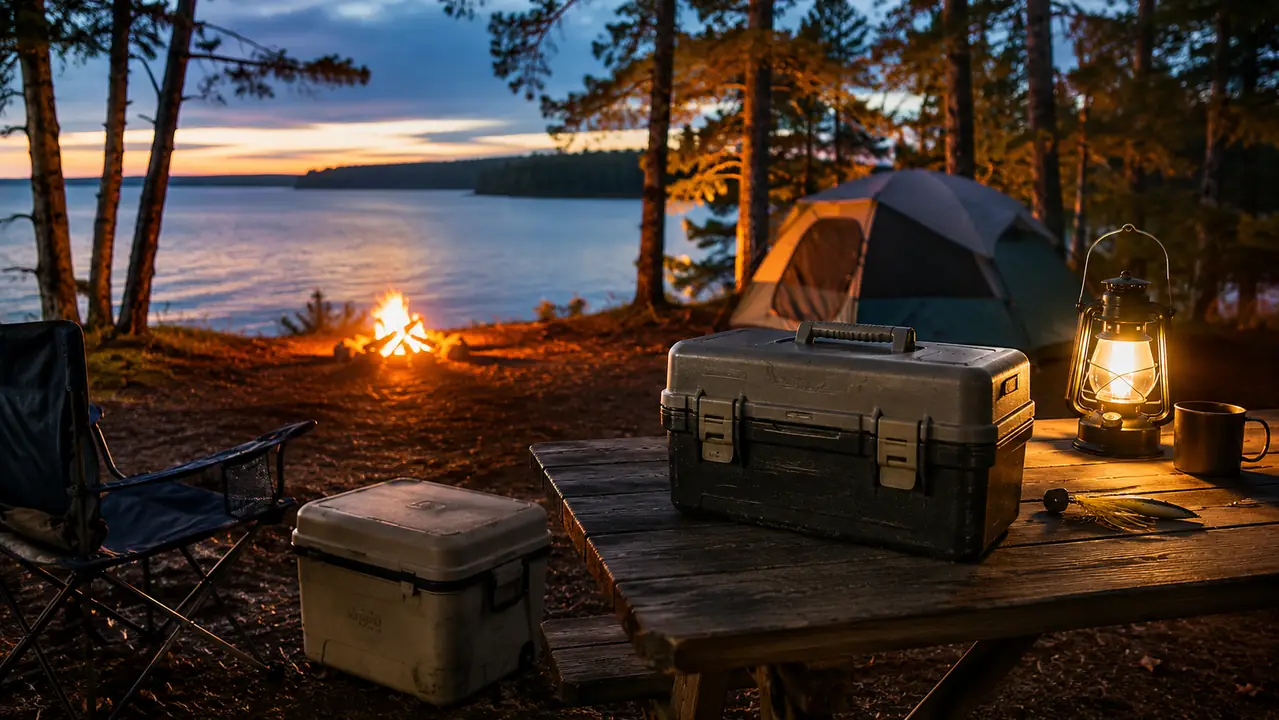
Mine holds about a dozen things: the spinnerbait that has been producing, two crankbaits running the depth I will be working, three pre-rigged hooks, a small handful of weights and swivels, and a pair of forceps. That tray rides on the boat deck or sits on the bank beside me. The rest of the box stays in the truck, or in the tent vestibule when I camp overnight on the same trip.
When the day is over, anything that got used goes back where it belongs the same evening, and anything that did not get touched gets a hard look. Two trips in a row without earning a cast and it earns a demotion back to the big box. The today tray is how a small box keeps acting small even with a season of gear living in it.
Fishing from a boat is why this step matters so much to me. On a drift, the deck is the wrong place for a full box: it tips, it slides, it soaks, and every wave rearranges it. A single tray wedged where you can reach it is the difference between a smooth change of lures mid-drift and a lean-over that turns a boat into a hat rack.
What Else Helps
Three small additions made the system hold up better than the box alone. A hook file lives in the deep well, because a PLUSINNO treble grabs every net, finger and pocket liner it can reach, and ten seconds with a file brings a dull point back. Pre-tied leaders on a small winder take the worst knot-tying job of the day off the table. And a strip of tape with my name on the lid settled, once and for all, whose box was whose every weekend I share the boat.
Moisture is the quiet enemy. Any box that sits in a marine locker all summer will grow rust on hooks that never touched water, just from the air. The PLUSINNO box shuts firmly, but I still drop a small desiccant packet into the deep well and I check the hooks at the end of a wet weekend. Ten minutes of maintenance after a rainy trip saves a full evening of re-sorting later.
Because I camp and hike on the same trips I fish, the box gets a second home. Wedged beside the cooler in the cab of the truck it drops out easily for a bankside hour without unloading anything, and in camp it lives in the tent vestibule or the dry bin, never out in the dew. A box you can reach from the front seat is one you will actually keep sorted, and a dry box is one you will not have to re-sort in the spring.
Then there is the annual reset. At the end of the season I empty the box back onto the table, replace any hook with the faintest sign of rust, and retire the lures that did not earn their tray that year. It takes me one evening, and it means the box is ready the weekend the ice goes off, instead of spending that first nice Saturday of spring sorting tackle.
The today tray turned a twenty minute dig into a ten second decision. I open one tray, grab the rig that earned its spot, and the other ninety percent of the box stays shut.
Organize It Once, Fish Every Trip
The PLUSINNO all-in-one box comes stacked and loaded, which is everything this method needs to work on the first evening. Give it one quiet night, run a today tray, and it becomes the fastest thing you open on the water. Check today's price on Amazon before your next trip.
Amazon Check Today's Price on Amazon →