
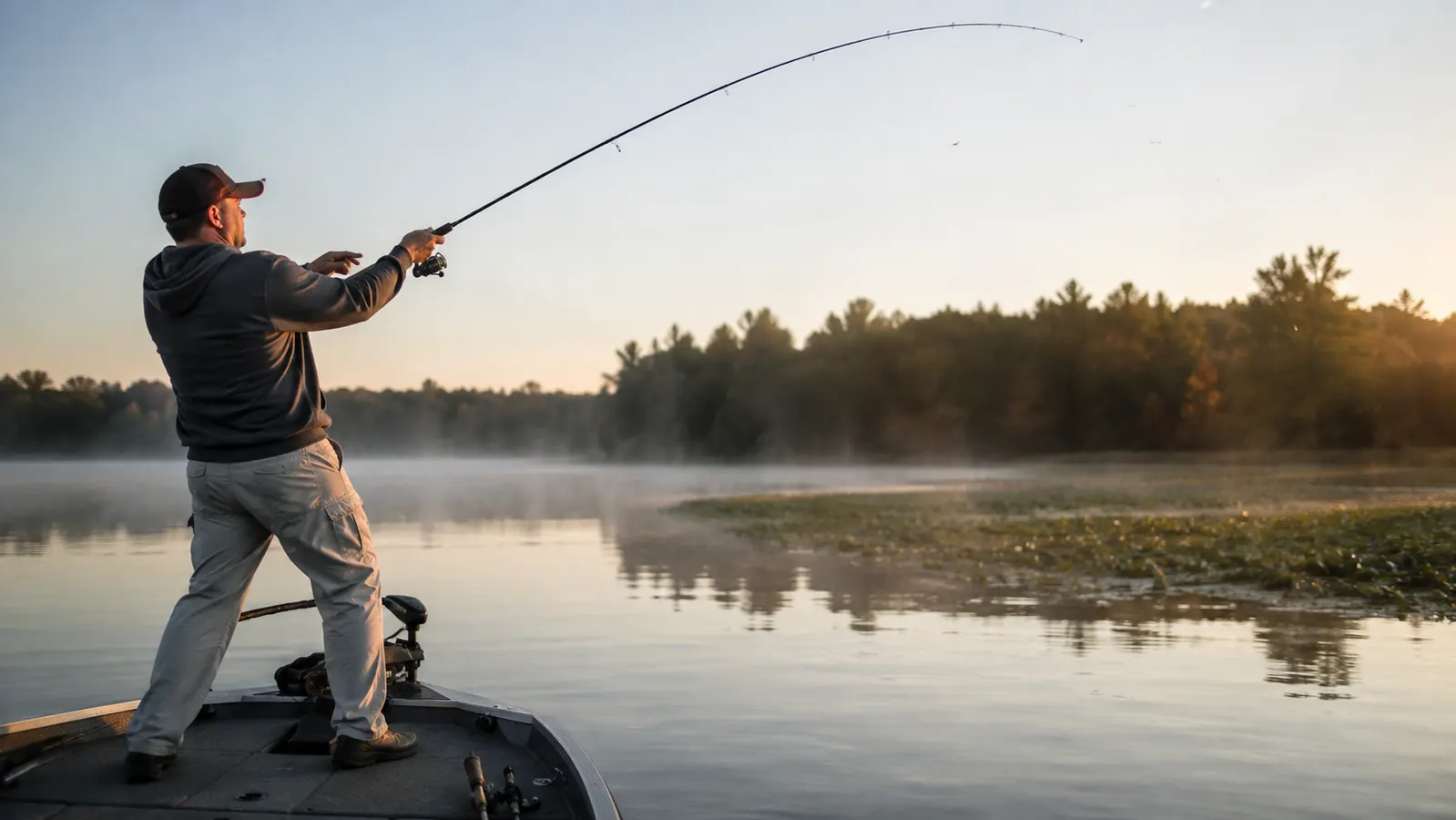
Every lake has one: the guy whose lure lands right on the weed line while the rest of us splash down twenty feet short. For a long time, off the bow of my boat, I was the rest of us. I fished a KastKing Centron combo most weekends, and my casts had plenty of effort and very little distance to show for it. I had tightened my drag, re-checked my knots, and watched the usual casting videos twice. None of it stuck, because none of it was aimed at what I was actually doing wrong.
Then one slow Saturday I took my cast apart piece by piece and rebuilt it from the grip up. The changes were small, they cost nothing, and every one of them was something I could practice in the clearing behind the tent while the rest of camp packed the truck. By the end of the season I was throwing comfortably past the spot where I used to start. This is the exact five-step method I run on the KastKing Centron spinning combo, and it is the same one I teach to anyone who sits in the passenger seat of the boat.
I want to be straight about what this guide is not. It is not me telling you to buy a longer rod or a fancier reel, because I have gone down both of those roads myself. I once blamed a brittle spool for my wind knots and a soft tip for my short casts, and I replaced gear that did not need replacing. The pieces below are free, they take a weekend to practice, and they will make whatever combo you own cast better. If you are about to buy your way out of this, try the method first. The gear was never the main problem.
You Don't Need a New Rod to Cast Farther. This Is the One I Practice On.
Everything below works with whatever combo you already own. I practice it on the KastKing Centron spinning combo, and it has been on my bow every weekend of the season. Check today's price on Amazon if you want to see it sitting beside your own setup.
Amazon Check Today's Price on Amazon →Five Steps to a Longer, Smoother Cast
Step 1: Fix Your Grip Before You Even Lift the Rod
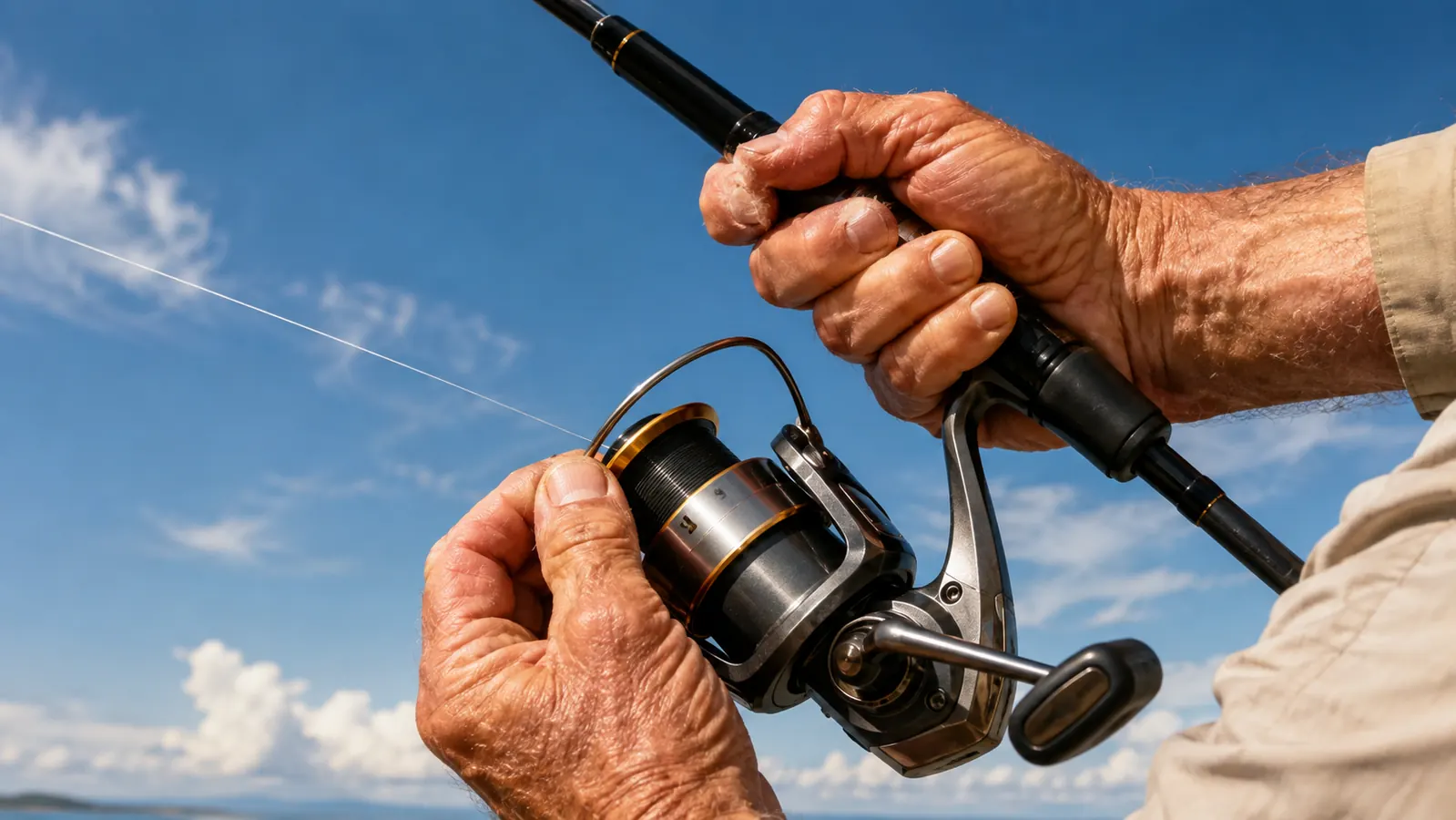
Stand the way you think you should stand for a cast, then look down at your hand. If all four fingers are wrapped behind the reel stem and your wrist is locked straight, that alone is half your distance problem. A locked wrist turns every cast into an armlock throw, and the rod tip never reaches the speed it needs because your whole body is trying to make that speed with muscle instead of leverage.
On the Centron spinning combo I keep two fingers ahead of the reel stem, with my thumb riding the top of the blank and the rod sitting on the knuckle of my index finger rather than deep in the palm. It looks minor. It is not minor. That little shift frees the wrist to hinge at the start of the cast, and a hinging wrist is what lets the blank load early and unload late.
Quick check before you cast: hold the combo loose enough that you can bounce the rod tip an inch without moving your forearm. If you cannot do that without the reel twisting in your hand, you are strangling the grip. A casting stroke needs a live, springy tip. You cannot get one from a rod you are squeezing.
The other thing the grip change fixed was the start of my stroke. With my old full-palm grip, the rod dipped a little the instant I began moving forward, and that dip robbed the blank of the load I had just built on the backswing. With two fingers ahead of the stem, the rod rides level and the load carries clean through the change of direction. Watch a good caster's rod tip during a long cast and you will see it travel level from the pause to the release. That level line is the load surviving the turn.
Step 2: Load the Rod on the Backswing, Don't Whip It
The most common cause of short, harsh casts is speed in the wrong place. Casters who rip the rod forward the instant the stroke starts get a fast tip and a dead finish, because the blank never bends. A rod that never loads is just a long stick you are throwing with, and a long stick throws about as far as your arm does, only less accurately.
The fix is to start slow. Bring the tip back to about 11 o'clock behind you and let the weight of the lure do the bending. On the KastKing Centron you can feel that load arrive as a slow, deep curve in the blank. Nothing about this half of the stroke should feel violent. It is better read as a pause while the rod gathers up the energy it is about to spend, the way you would draw a bow before you let go.
This was the hardest habit for me to break, because slow feels wrong. A cast that is going to reach should feel lazy on the way back and only turn on in the last third. If your backswing is fast and grabby, you are spending the whole cast's budget on the half that does none of the work.
If you want to feel the load rather than guess at it, try this with a practice plug: on the backswing, let the rod settle for the count of one before you start forward. The tip takes a visible, deep curve and the blank pulses against your palm. That pulse is your signal. Release it too soon and you get a weak cast with no carry. Wait, and let the rod unload on its own, and you get distance without extra effort. The pause is the whole trick, and it is the hardest thing to believe until you feel it.
Step 3: Drive Forward, Then Stop High
The forward stroke is not one continuous whip, no matter how it looks on video. It is a slow start, a strong acceleration as the rod comes past your shoulder, and then an abrupt stop high in front of you, around 10 o'clock. The stop is the part people skip, and it is the part doing the work. When you stop the rod hand, the blank keeps moving and unloads every bit of that stored bend into the line.
If you follow through all the way down to your waist, you have aimed the energy at the water and the lure will slap down short. Stop high and the energy leaves the tip flat and forward, and flat forward is where the extra yards are hiding. When I videoed my own casts on the Centron and saw the tip flash forward at the stop, the difference was obvious: hard and short before, smooth and long after.
Wind is where the stop matters most. Casting into a headwind, I stop the rod a touch lower, around 11 o'clock instead of 10, and release a hair earlier so the lure stays flat under the wind instead of climbing into it. With a tailwind I hold the stop higher and let the wind push the loop out long behind it. The stop is not a fixed thing you find once. It is a dial you turn as the conditions change, and it is the tool that lets the same rod throw a different cast.
Step 4: Release Off the Finger, Flat, and Let the Line Unroll
A spinning reel releases off your index finger, and timing is everything. Too early and the lure climbs into a high balloon that dies in the wind and drops the line in loose loops. Too late and the lure drives down at the water instead of out. I let go when the rod tip is just past eye level in front of me, pointing the tip exactly where I want the line to travel.
The follow-through matters as much as the release. After the line leaves, keep the rod tip up and let the loop unroll. Beginners drop the tip the instant they release, which throws a wave of slack into the line and costs the cast its last stretch of distance. Keep the tip at eye level until the lure is past halfway and you will hear the difference: a smooth hum instead of a snap.
I know this feels strangely slow. The cast that finally reaches the weed line feels like sixty percent of what a full effort should feel like. That is the tell that it is working. You are not throwing harder, you are throwing later, and the rod is doing the throwing.
Distance is only half of what the release controls. The release also sets your accuracy, because the lure goes where the rod tip is pointed when the line leaves. I practice by picking a target, a floating leaf or a spot on the far bank, and trying to land the plug within an arm's length of it. Once the release is consistent, the same stroke that adds distance adds precision, and the two turn out to be one motion, not two separate skills.
Step 5: Feather the Spool With Your Thumb and Stop on the Spot
Here is the trick I promised at the start, and it is the one that changed my casting more than any other piece of this. Spinning reels build wind knots because the line comes off the spool in loose coils whenever tension drops. The fix, once you are mid-cast and the line is peeling, is to bring your thumb over and lightly brush the lip of the spool. Just a whisper of contact, enough to put tension back on the line.
That thumb does two jobs. It smooths the line as it comes off, which all but ends wind knots before they can start. And it gives you that soft feathering sound from the spool that tells you the cast is under control. The first time I added this to the Centron and felt how quiet the spool ran, I nearly laughed. My casts got smoother in the same afternoon, and the tangles I used to pick out of the line every third trip mostly stopped showing up.
The last piece is parking the cast. As the lure nears the target, press your index finger over the line against the blank. That stops the line without yanking the lure back, and it lets you drop the bait exactly where you were aiming. Distance only matters if you can end the cast on the spot you picked, and this is what makes distance usable instead of just impressive.
One honest trade-off on the thumb feather: too much pressure and you stop the cast early, dropping the lure short of where your stroke was aimed. The contact should be the lightest touch that keeps tension, not a brake. If you feel the cast dying in the air, back the thumb off a little. You are looking for a soft hum from the spool, not a stop.
What Else Helps
Line is the cheapest distance upgrade in the tackle box. On the Centron I run a thinner braid, because a thinner line of the same strength flies farther and parts the wind instead of fighting it. If you are still casting heavy mono, try a lighter line before you touch your stroke. Line weight is doing more of the work than most people give it credit for.
Lure weight matters up to a point too. A little more weight loads the blank deeper and buys distance, but only up to what the rod is rated to throw. Go past that and you get a mushy, over-matched cast and a bad habit of muscling it. Match the lure to the rod, then let the rod do the work you just taught it.
Wind is the other variable worth naming. Nobody casts as far into a headwind as they do with none, and chasing distance into the wind just builds bad habits. On breezy days I shorten my target, reach for a slightly heavier plug to hold the lane, and stop the rod a touch lower. Save the distance work for a still morning and you will measure real progress instead of blaming the weather.
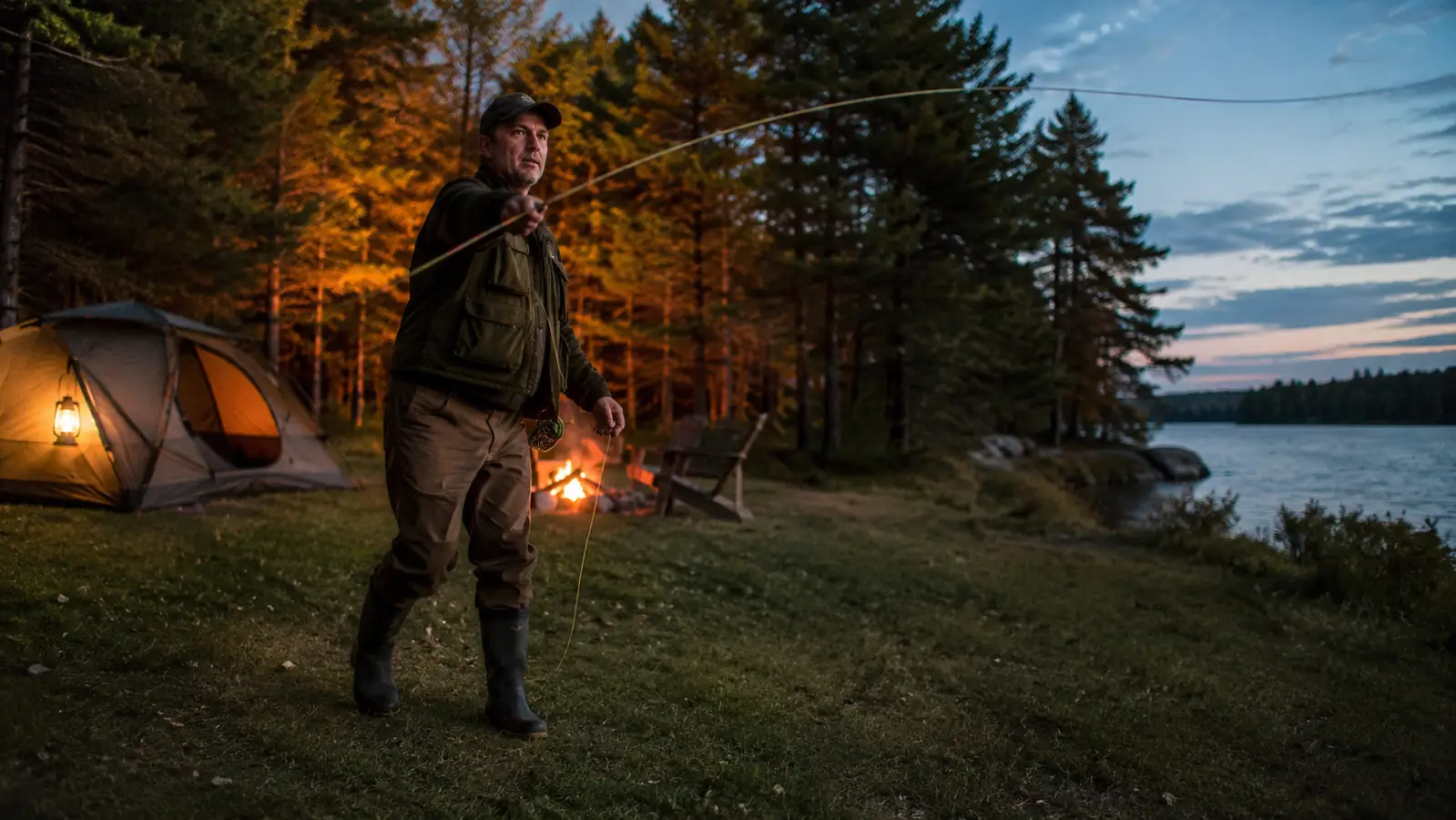
The other thing that helps most is the practice you can do at camp. When the camp is set, the fish are quiet, and it is too early for a fire, I walk out into the clearing with the KastKing Centron and a weighted practice plug and make fifty casts by headlamp. It is the closest thing to free fishing there is, and it is where the shoulders learn the rhythm so the lake does not have to.
The thumb on the spool lip was the whole ballgame. My casts got smoother in an afternoon, the wind knots stopped coming back on the retrieve, and I finally stopped blaming my reel for my release.
Take These Five Steps to Your Own Water
A combo that loads clean and holds up to a season on the bow makes the whole method easier to learn. The KastKing Centron is the one that taught me, and it is the one I hand to anyone who wants to try. Check today's price on Amazon and run the five steps on your own water this weekend.
Amazon Check Today's Price on Amazon →