
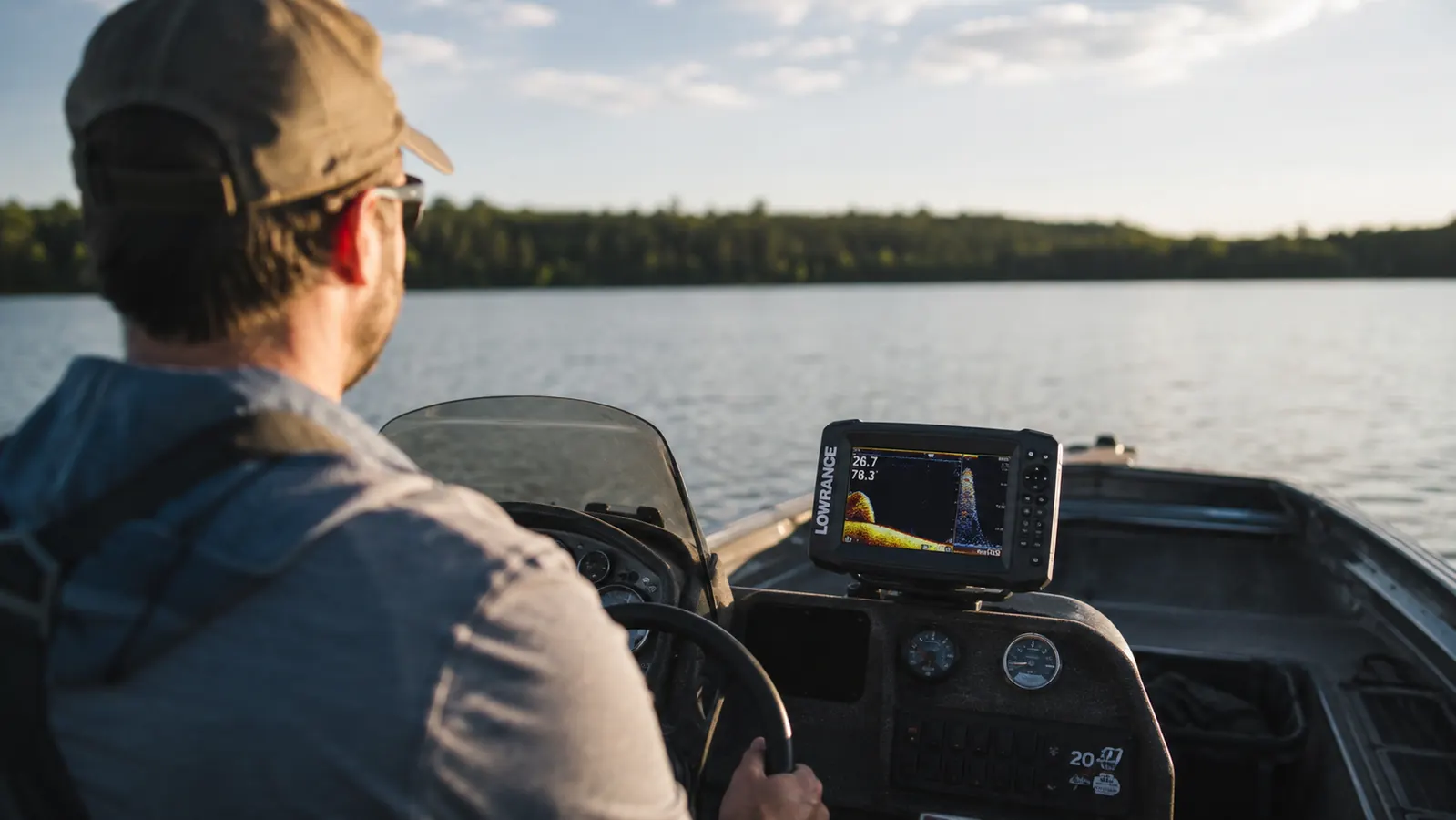
The first thing that broke on my Garmin Striker 4 was not the sensor, the screen, or the GPS receiver. It was the mount. Mine came apart on a Tuesday morning two seasons in, right as I throttled down out of a wave-torn cove, and it was only the steel ball mount I had already fitted that kept the unit on the console instead of bouncing around the floorboards.
That is this review in one scene: a sonar that keeps earning its keep, wrapped in mounting hardware that was too cheap to match it. Three seasons and maybe a hundred trips on Barren River Lake, most of them from a 17-foot aluminum with a 40-horse tiller outboard, and the Striker 4 has shown me structure on mornings when the boats around me with screens five times the price were still guessing. It has also taught me exactly where the money was saved. This is the honest version, bracket and all, including the parts nobody puts in the listing.
The Quick Verdict
Still the smartest first fish finder for the money, if you budget in a replacement mount and a hat brim for the screen.
Amazon Check Today's Price →The Striker 4 is the honest place to start
If you fish from a boat or a kayak on weekends and do not own a fish finder yet, this is where the money should go first. Read the corners below so you know exactly what you are buying, then check today's price.
Amazon Check Today's Price on Amazon →How I've Used It
The unit lives on the casting deck of my 17-foot tiller boat, wired to the starting battery through an inline fuse, with the transducer bolted on the transom and the cable run up through the splash well into a sealed grommet. Since I camp and bank-fish on the same weekends I trailer the boat, I wanted a unit I could pull off the deck and carry, so the head end runs off a 9Ah sealed battery in a dry box whenever the boat stays on the trailer. Three seasons in, that portability has turned the Striker 4 into a camp tool as much as a boat tool, and it is the feature I did not expect to care about.
Over those seasons I have also marked the launch ramp, a brushpile off the third point north, the flooded timber that holds bass in early spring, and a sunken bridge pier that nobody at the ramp believes in. The GPS memory is the reason I reach for this unit before any other, because it turns a featureless reservoir into a map I can trust in the dark and in fog, and that is more than most of the pricier screens on the dock can say on their own.
For the record, this unit gets used hard. It has been rained on, baked on a July deck, and jostled down two-track ramps on the way to the water. I dry it off at the end of the day, but I do not baby it, and that matters, because the honest review of any fish finder is only as honest as the abuse it has survived. The unit that lives in a padded case and never leaves the console is not the unit I am reviewing.
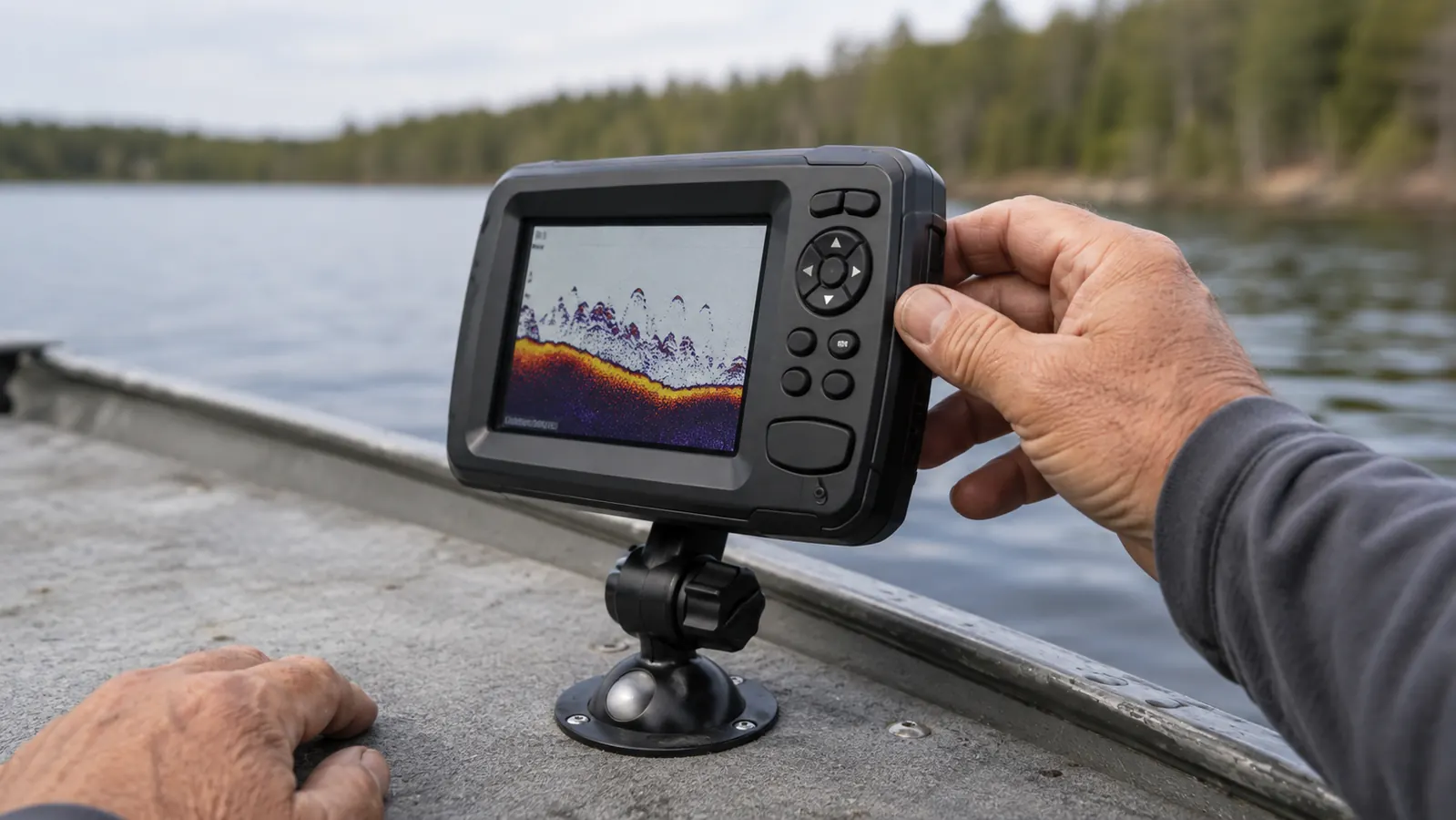
The Mount: What Broke First
Start with the mount, because it is the part that will shape your opinion of the unit in the first season, and because it is the cheapest thing on the boat to fix. The tilt and swivel bracket Garmin ships in the box is molded plastic with a friction ball and a tightening knob, and under motor vibration and repeated wave slap that knob works itself loose in hours, not months. It does not fail dramatically. It slumps. You glance down and the screen is facing the sky instead of you.
Mine got floppy over the course of an afternoon of six-foot rollers, and I caught it one hard slam before it left the dash entirely. That same weekend I pulled the unit off the deck, ran a stainless 1/4-20 bolt and a nyloc nut into the threaded insert on its back, and fitted it onto a steel ball mount. Two seasons later it has not moved a single degree, through every boat wake on Barren River Lake and a winter on the lift, and I have stopped thinking about the mount entirely, which is the whole point of fixing it.
Nobody warns you about this because nobody reviews the bracket, and the pattern across the forums is consistent: the mount goes first, the transducer installation second, and the unit itself last. My advice is to skip the stock bracket entirely, buy the ball mount the same week you buy the fish finder, and spend the forty minutes it takes to mount it right, once. You will never think about the mount again, which is exactly the outcome you want from a piece of gear you paid for.
One honest note about the fix: the threaded insert on the back of the unit is a standard size that every ball mount in the world fits, which makes this a small, well-trodden repair instead of a reason to shop elsewhere. That is the whole reason I keep recommending this unit to people who are new to electronics on the boat. The one weak part has a cheap, familiar solution, and that is a good problem to have.
The Screen in Direct Sun
Here is the honest part that the listing glides past: the screen washes out. Past two in the afternoon on a clear lake in July, the glare turns the display into a mirror of the sky overhead, and I read the Striker 4 mostly from memory, leaning in close enough to block the sun with my own head.
The backlight helps less than you hope. On a screen this small there is almost no room for a visor, so the workable fixes are a mount position that keeps the display in the shadow of the console or gunwale, and fishing the hours when the fish actually bite. I have done both, and honestly the second one is the better fishing advice anyway, which is the kind thing nobody wants to hear in a review but every angler already knows.
Is it a reason to pass on the unit? No. It is a reason to mount it thoughtfully and to fish the hours most of us already fish, but a washed-out screen in the middle of a bright afternoon is a real con, and every review that skips it is doing you a quiet disservice. When someone tells you this screen reads fine in full sun, they fish different hours than I do, or they fish under a bimini top.
The Learning Curve Nobody Warns About
The second thing the reviews skip is that you will not be good at reading this unit for about three weekends. The default gain runs hot, which sounds like a feature and is not. It paints the screen with clutter, ghost bottom rings, and dark blobs that look exactly like the schools of fish in the demo video, and a new owner will burn a month chasing half of them.
The fix is the same for every entry fish finder on the water. Idle over something you know is on the bottom, a brushpile or a dock post, and drop the gain until the bottom is a clean single line and the object shows up as a crisp, separate mark. Spend one afternoon doing that and the arches start making sense, and you start telling a weed line from a thermocline from a bait ball, instead of treating every blob on the screen as a reason to stop and cast.
I run the split screen with both beams for most of the day and flip to a single wide beam when I am prospecting new water, which is two button presses, not a menu project. The part that takes real time is the reading, the part no accessory fixes and no update downloads. It takes water time, which is the one thing you came to the lake for anyway, so treat the first few weekends as tuition rather than a defect in the unit.
None of this should talk you out of the unit, because none of it is the unit's fault. Every fish finder in this class has a gain dial that begs to be turned up, and the Striker 4 is simply the one you are learning on. The mistake is believing the learning curve is a reason to pay twice as much, when the truth is the next unit up asks the same questions with a bigger screen.

The Transducer Quirks (Honest Edition)
The transducer Garmin ships with the Striker 4 is the stronger half of the package, and after three seasons I would defend it against sensors on units that cost quite a bit more. The honest quirks are about behavior and installation, not durability, and they are worth knowing before you drill a single hole in your boat.
At trolling speed and idle drift the picture is everything a first fish finder should be. On plane, expect the bottom to drop in and out depending on hull turbulence and how your transom sits in the water, and know that this is not a defect, it is an installation conversation. Spend twenty minutes moving the transducer an inch higher or deeper on the transom, and the dropout usually cures itself.
And if you ever run the cable through the hull, seal the grommet the day you install it, and I mean the same day. A trickle of bilge water finds the smallest gap, and water in that cable is the one failure that takes a sensor out for good. On a weekend rig that lives on a trailer, that is the difference between a fix and a whole replacement.
Power, Storage, and the Details the Listing Rushes Past
The Garmin Striker 4 draws very little current, and that is its own quiet selling point. On the boat it shares the starting battery without complaint, and off the boat it runs a full weekend of bank fishing off a small sealed battery in a dry bag. For an angler who camps on the same weekends he fishes, that portability is the difference between a boat tool and a whole-trip tool, and it is the reason mine comes off the deck most Friday nights.
The buttons are the old four-button-and-rotary layout, which looks dated and is actually excellent: you can run it with gloves on in October without looking down. It boots fast, catches the GPS satellites in a minute or two, and the four-pin transducer plug is simple enough to swap in the dark if you keep a spare. That is the whole maintenance story, which is this review in miniature: not much goes wrong, and what goes wrong is cheap and fixable.
What I Liked
- CHIRP sonar reads bottom and structure cleanly at the depths weekend anglers actually fish
- Built-in GPS and waypoint memory make a strange lake yours by the second trip
- The included transducer is genuinely good and holds its own against pricier sensors
- Battery draw is tiny, so the head end goes portable with a small pack for camp and bank trips
- Simple physical buttons you can run by feel, even in gloves
Where It Falls Short
- The stock mount works loose and will not live as long as the unit
- Screen washes out in direct afternoon sun without shade or a smart mount position
- Real learning curve on gain; budget three weekends before the screen makes sense
- The three-and-a-half-inch display is cramped for split-screen reading
- No built-in maps, just a trail and waypoints
The sonar has never once lied to me. The mount has flaked on me twice, the screen washes out by two in the afternoon, and I would still buy it again tomorrow with an hour and a cheap ball mount.
Who This Is For
The honest short version: buy the Garmin Striker 4 if you fish from a boat or a kayak on weekends, you have never owned a fish finder, and you want depth, bottom type, and structure you can act on instead of casting blind for another season. It is the cheapest way onto the water that teaches you your own lake, and three seasons have not changed my mind on that. My long-term review covers the sonar picture and the waypoint habit in more depth.
It earns its place around camp, too. Pull it off the deck, drop it in a dry bag with the small battery, and a bank sit becomes a real scouting trip instead of an afternoon of guessing. I have also run it on a rental canoe twice, and the side-by-side I wrote against the Humminbird PiranhaMAX shows exactly where the built-in GPS becomes the whole difference between the two units.
Who Should Skip It
Skip it if your happiest fishing hours are the bright middle of a clear day and you have no interest in shading a small screen with your own body. Skip it if you already own a unit with side imaging or a display bigger than five inches, because this is a first fish finder, not an upgrade, and it will feel like a step backward every time you glance at it.
And skip it, honestly, if maps are the real point for you. The Striker 4 records where you have been and holds the spots you have marked, but it does not draw contours or shorelines, and no amount of menu work changes that. If you need the lake drawn for you, this is the wrong rung of the ladder, not a defective one, and the money should go to a chartplotter instead.
Three seasons in, I would buy it again
The mount is a ten-dollar fix and an hour of your time, the sun is a hat fix, and the learning curve is three weekend trips. What is left is a sonar that reads your lake better than you will trust at first, and that is the honest bottom line. Check today's price and decide for yourself.
Amazon Check Today's Price on Amazon →